Building A Predictable Lead Engine For Premium Real Estate – Shri Durga Developers
Real estate is one of the most emotionally loaded and financially significant decisions a family or investor makes. It’s also one of the hardest to sell purely through digital channels. People don’t “click and buy” an apartment or plot; they research, compare, seek referrals, and need multiple trust signals before they even call a sales advisor.
Since 2010, Shri Durga Developers has been a dominant name in the North Karnataka real estate market. They turned to Musing Quills to bring that decade-long offline reputation into a structured, digital-first lead generation system that could consistently identify serious buyers and feed qualified enquiries to their sales team.
Client Overview:
Brand: Shri Durga Developers
Category: Real estate – residential apartments and plotted developments
Region: North Karnataka, primarily Hubballi
Track record: Over 1,800 families housed and 950+ highly satisfied clients since 2010.
Shri Durga Developers is known locally for:
Quality construction and thoughtful design
Transparent dealings and clear documentation
Architecturally strong projects in prime locations around Hubballi.
From premium apartments to well-planned layouts, their proposition is clear: turning land into lasting legacy assets for families and investors.
The Challenge: Navigating A High-Friction, High-Ticket Purchase
Even with a strong offline reputation, selling real estate through digital channels faces unique hurdles:
High friction: The buying journey involves multiple stakeholders, site visits, and financial planning.
Longer decision cycles: Prospects rarely convert on first touch; they need repeated, consistent exposure.
Noise and mistrust: The market is filled with both credible and questionable players, making digital claims alone insufficient.
For Shri Durga Developers, the specific challenge was:
Design a digital engine that could identify high-intent, high-fit prospects — high-net-worth individuals, investors, and families actively looking for property in Hubballi — and funnel them directly to the developer’s advisory and sales teams.
The goal was not just any leads; it was qualified, relevant enquiries that respected both the ticket size of the purchase and the brand’s legacy.
Strategy: A Dual-Platform Ecosystem – Google + Meta
Musing Quills architected a comprehensive performance marketing ecosystem that leveraged the strengths of both Google and Meta:
Google Search for bottom-of-funnel, high-intent traffic
Meta (Facebook & Instagram) for demand creation, emotional storytelling, and behavioural targeting
This dual-front approach ensured that:
People already searching for property in Hubballi would find Shri Durga Developers at the exact moment of intent.
People in the right life stage and financial bracket would be primed with emotional, aspirational messaging — even if they weren’t actively searching yet.
Google Search: Capturing Existing Intent
On Google, the focus was straightforward and sharp:
Capture users already searching for relevant queries around property, apartments, and layouts in Hubballi and surrounding areas.
Use well-structured Search campaigns to appear at the bottom of the funnel, where people are closer to taking action.
The logic:
If someone is typing real-estate oriented searches for your geography, they are already in “consideration” or “decision” mode.
For a brand with a strong offline legacy like Shri Durga Developers, being visible at this moment significantly increases the chance of being shortlisted.
These Search campaigns functioned as intent capture, feeding the pipeline with people who were already actively looking.
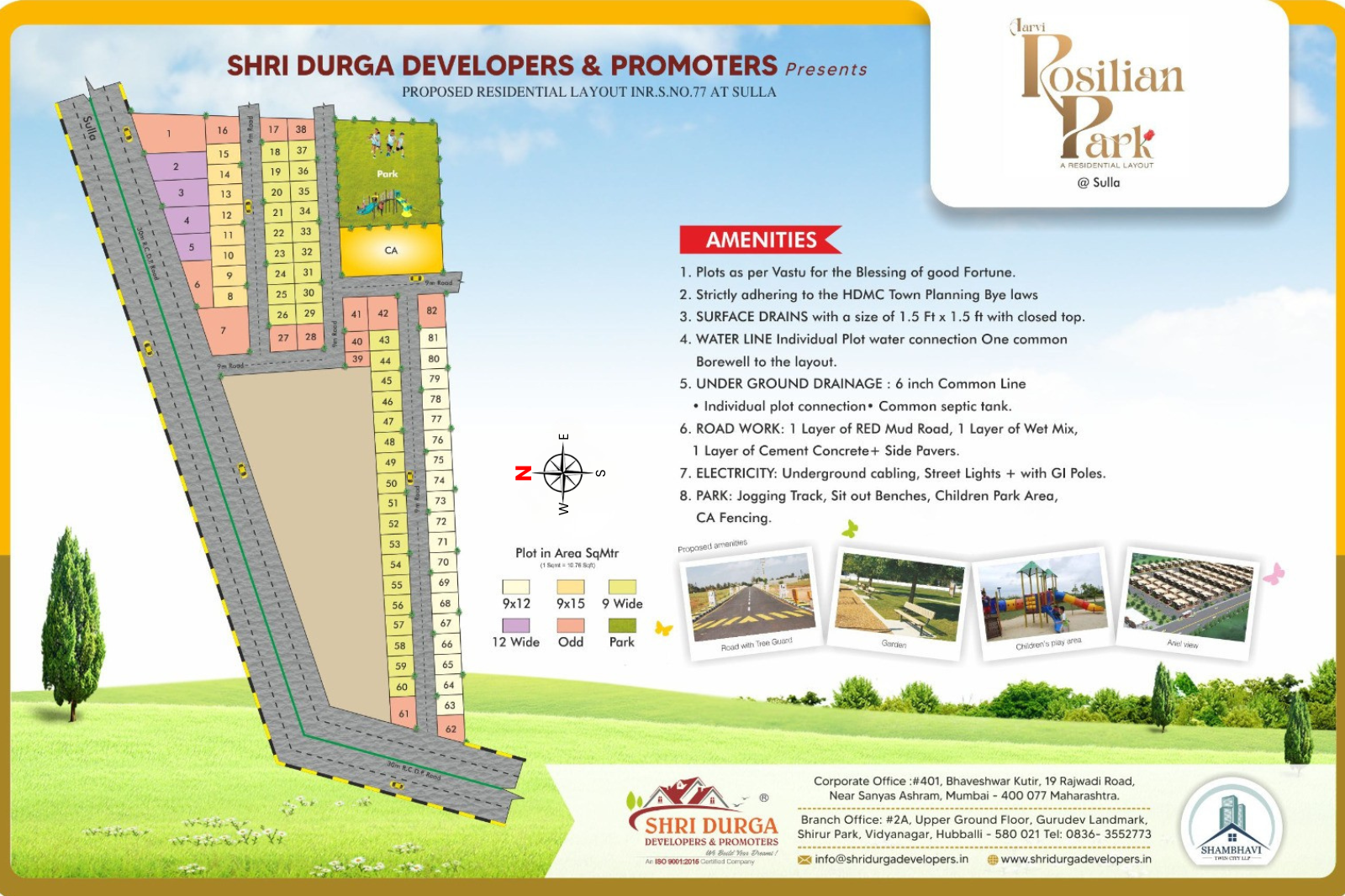
Meta Ads: Behavioural Targeting For High-Value Prospects
On Meta (Facebook and Instagram), the strategy was more nuanced and behaviour-driven.
Audience Strategy
Musing Quills designed targeting to approximate real-world buying signals:
Newly married couples – a classic life stage where home-buying decisions are often initiated.
Users showing interest in home loans – a strong indicator of active planning around property purchase.
Established business owners – more likely to consider commercial investments and premium assets.
By focusing on these cohorts, the campaigns:
Reached people whose life events and behaviours align with property purchase.
Avoided wasting budget on segments unlikely to convert in the near term.
This alignment between targeting logic and real buyer psychology is what made the Meta layer more than just “generic brand awareness”.
Creative Direction: Selling The Legacy Of Home, Not Just Square Feet
Real estate ads often default to:
Floor plans, unit plans, or blueprint visuals
Dense technical detail
Generic stock images of buildings.
For Shri Durga Developers, Musing Quills chose a different creative philosophy:
Focus on the emotional resonance of homeownership and legacy, not just features.
Visuals
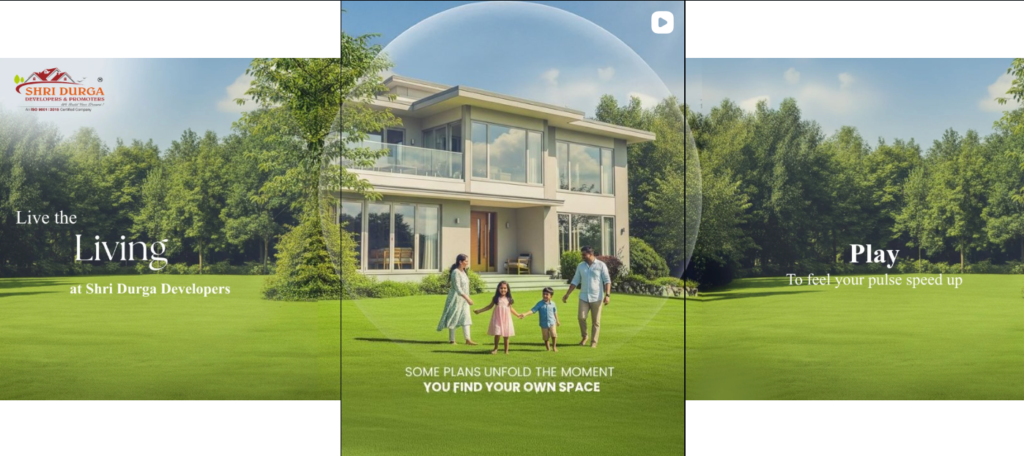
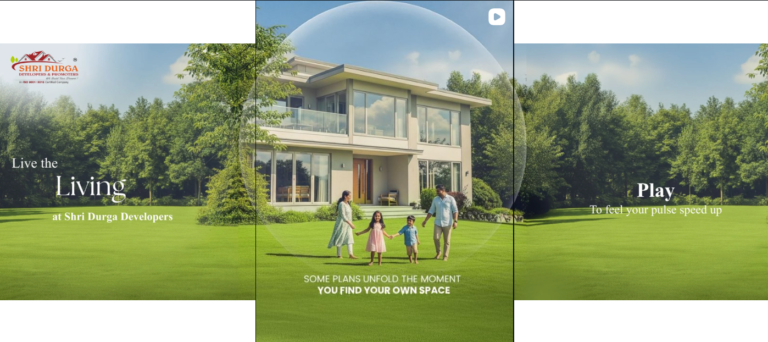
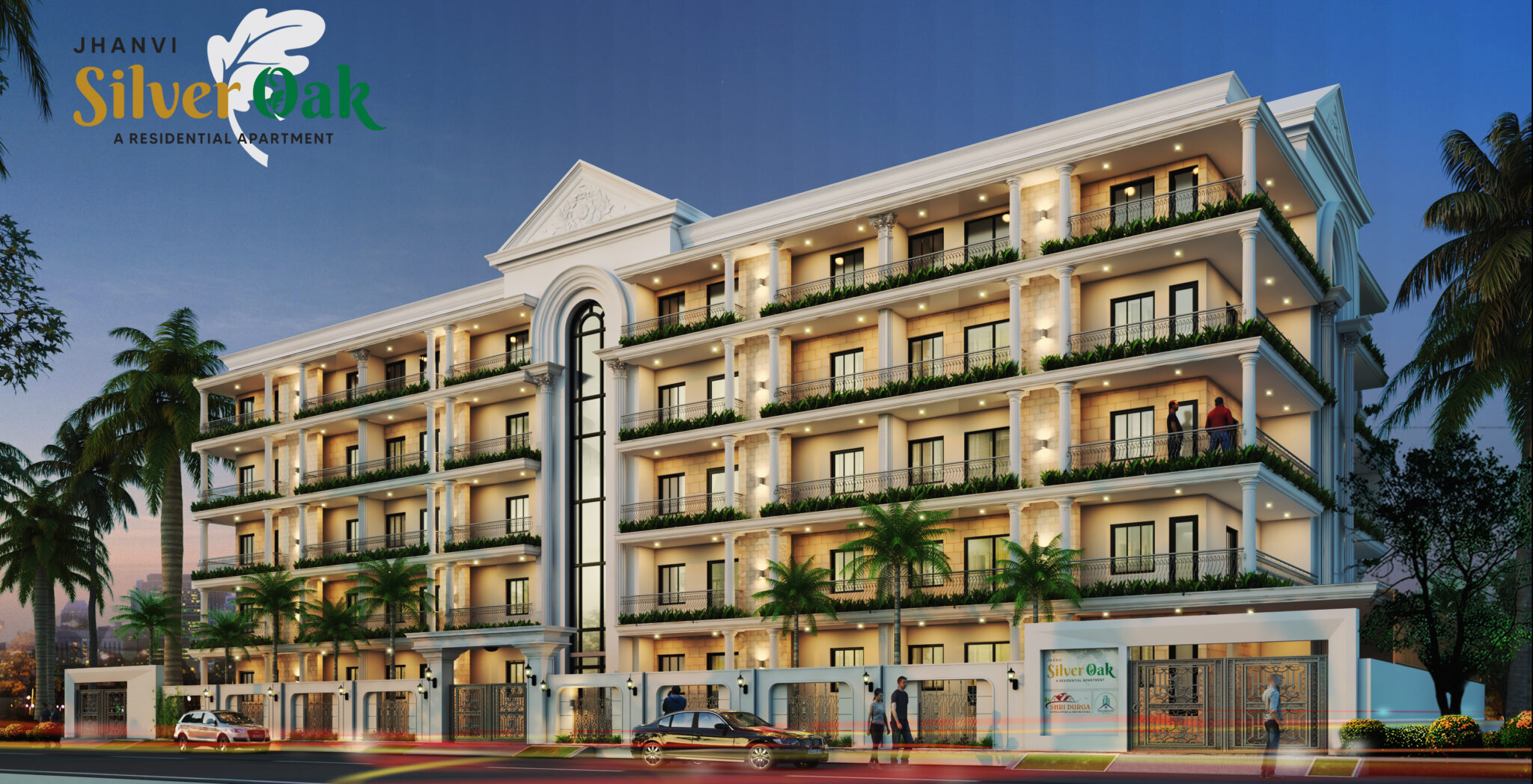
Emphasis on high-definition 3D renders that felt cinematic and aspirational.
Imagery that hinted at lifestyle — well-designed spaces, natural light, family time — rather than just facades or technical drawings.
Copy
Strong use of scarcity and exclusivity to position projects as limited opportunities, not mass-market stock:
Framing around “limited units”, “premium pockets”, or “exclusive community” (based on your original messaging).
Integration of social proof by leveraging their decade-long history, 1,800 housed families, and 950+ satisfied clients to reinforce trust.
Together, visual and copy choices aimed to:
Make prospects feel the lifestyle and security associated with owning a Shri Durga Developers property.
Signal that they were dealing with a serious, established developer, not an untested entity.
Execution: Creating A Predictable Lead Flow
The interplay between Google and Meta was carefully orchestrated:
Google Search captured users already expressing clear property-buying intent.
Meta Ads ran in parallel to:
Keep the brand top of mind among targeted cohorts.
Create emotional desire and familiarity even before prospects searched.
Retarget engaged users and website visitors with more specific project-tail messages.
All leads – from both platforms – were channelled into the sales CRM, giving the advisory team a consolidated view of:
Who was coming in
Which campaigns and messages were driving them
Where to prioritise follow-up based on fit and intent.
The system wasn’t just about “getting forms filled”; it was about feeding the sales engine with cleaner, more relevant opportunities.
Results: Fewer Junk Enquiries, More High-Intent Prospects
The dual-platform strategy delivered exactly what was intended:
It created a highly predictable pipeline of qualified leads for the sales team.
By aligning creative, targeting, and channel roles, the campaign drastically reduced the volume of “junk” enquiries — those who were browsing casually or completely out of fit.
High-intent prospects were consistently delivered directly into the sales team’s CRM, streamlining their outreach and improving the efficiency of their follow-ups.
While the document doesn’t specify numeric CPL or lead volume, the qualitative shift is clear:
More conversations with people who were actually in the market for property in Hubballi,
Fewer wasted calls on non-serious or mismatched leads,
A smoother bridge between digital marketing and on-ground sales.
Most importantly, this system supported Shri Durga Developers in continuing their rapid growth trajectory, now with digital as a structured acquisition channel rather than a peripheral activity.
Strategic Takeaways For Real Estate Performance Marketing
This case study gives you strong talking points when positioning Musing Quills to other real-estate and high-ticket clients:
Real estate needs both intent capture and demand creation.
Google Search captures active seekers; Meta builds desire and primes the right cohorts based on real-life signals.
Behavioural targeting should mirror real buyer life stages.
Targeting newly married couples, home-loan seekers, and business owners is not random; it aligns with when and why people buy property.
Creative must sell emotion, not just architecture.
High-ticket assets move when people can imagine themselves — and their families — in the lifestyle, not just when they see a floor plan.
Legacy and social proof are performance levers, not just brand fluff.
Highlighting 1,800+ housed families and 950+ satisfied clients directly supports conversion when combined with strong visuals and clear offers.
The goal is lead quality, not lead volume.
For developers, a predictable stream of high-intent leads is far more valuable than a flood of unqualified enquiries that waste sales bandwidth.