Whale Wearables is a Belagavi‑based women’s safety startup founded by Nandita Yenagi and Sharad Patil. The company designs patented self‑defence wearables such as Whale Thunder (stun‑enabled glove) and Whale Click (SOS wristband) to help women defend themselves and call for help quickly. After appearing on Shark Tank India Season 4 and securing a deal of ₹30 lakh for 3% equity, Whale needed a website that could simultaneously:
Explain their products clearly to potential customers
Capture pre‑bookings while devices were still in the prototype phase
Communicate the social‑impact mission to investors and media
Build a community narrative around women’s safety.
Musing Quills designed and developed whalewearables.com to become the startup’s public face post–Shark Tank: a place where “protection meets design” and where product information, mission, and movement all live together.
Brand: Whale Wearables
Category: Women’s safety wearables / self‑defence tech
Founders: Nandita Yenagi & Sharad Patil
Flagship Products:
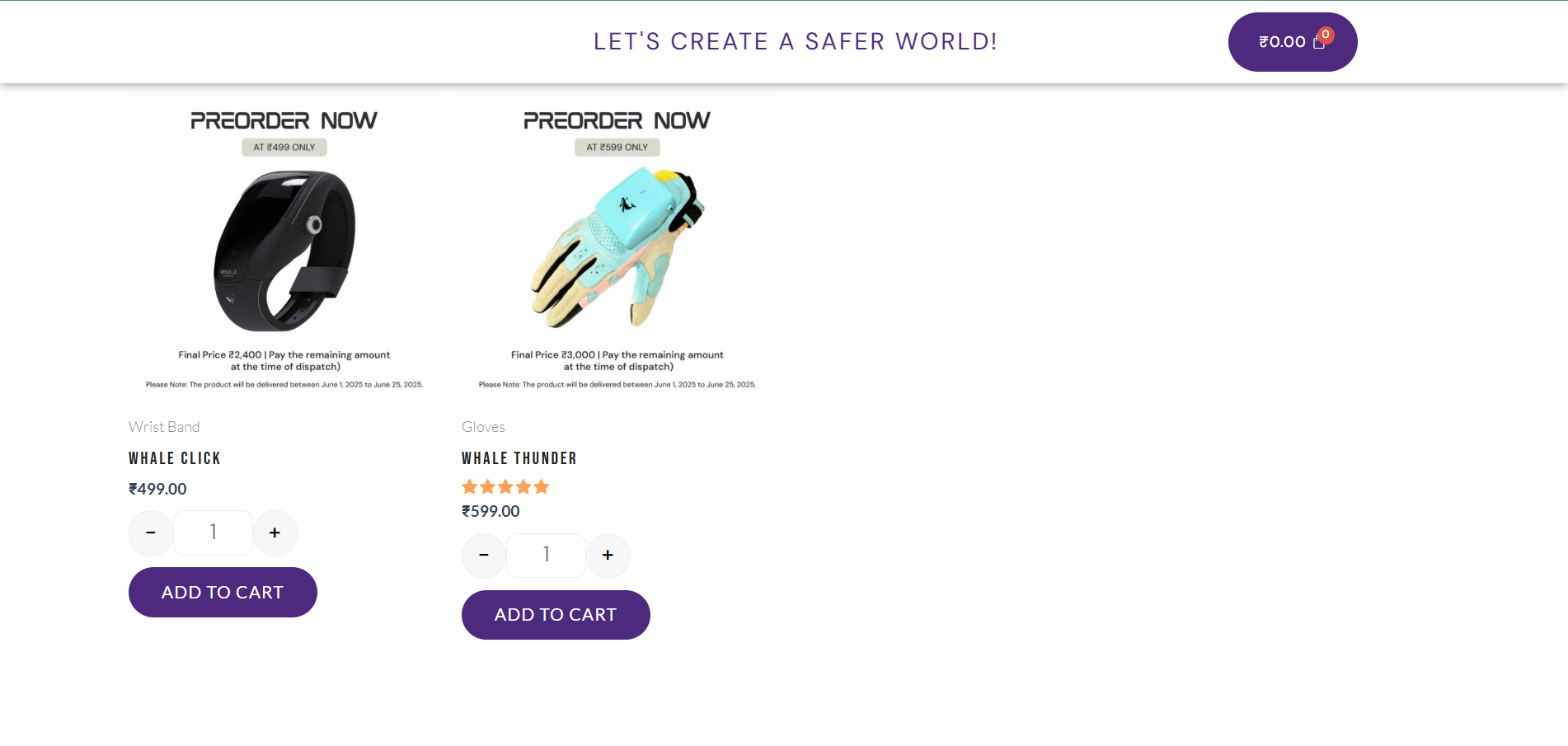
Whale Thunder Gloves – a smart glove that can deliver a controlled electric shock to an attacker (around 4,000 volts), emits a loud siren, has a flashlight, and triggers GPS alerts.
Whale Click Band – a wrist‑worn SOS band with a pressure‑sensitive trigger that sends emergency alerts and location, designed to avoid accidental activation.
The brand’s mission is explicit:
“Let’s create a safer world!” — safety as a right, not a privilege, delivered via discreet, stylish wearables that blend into everyday life.
Whale’s products were still in prototype/pre‑launch when the Shark Tank episode aired, so the website had to lean heavily on vision, explanation, and pre‑booking, not traditional e‑commerce.
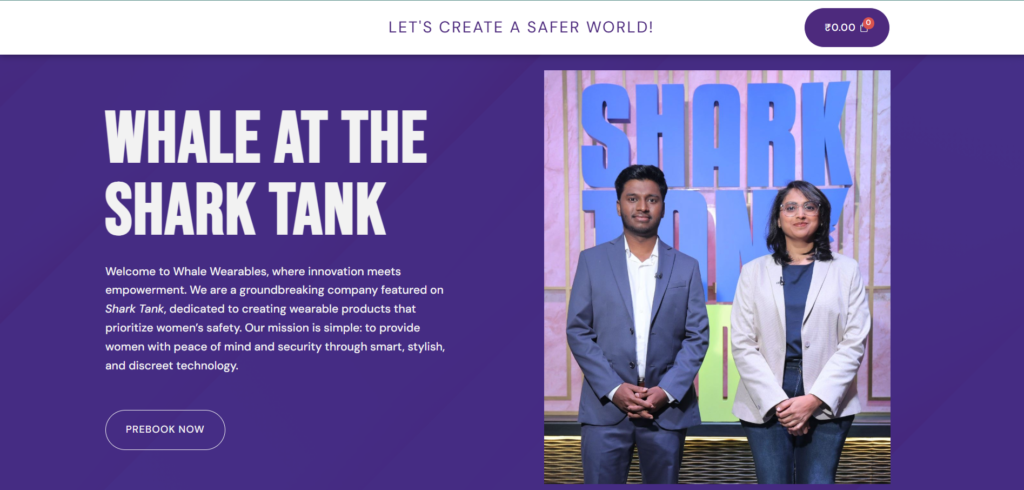
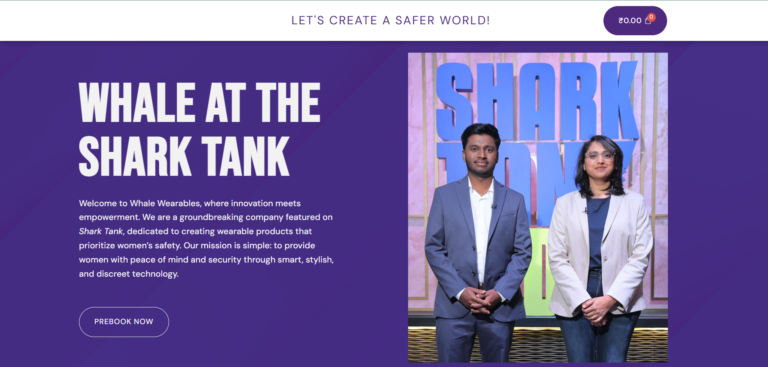
1. Mission‑First Hero Messaging
The hero section leads with a clear, emotional line:
“let’s create a safer world!”
Immediately under it, the copy sets the tone:
“Welcome to Whale Wearables, where innovation meets empowerment.”
“We are a groundbreaking company featured on Shark Tank, dedicated to creating wearable products that prioritize women’s safety.”
This does three things:
States what they do: wearables for women’s safety.
Signals credibility: as seen on Shark Tank India.
Frames the emotional benefit: peace of mind and security through smart, discreet tech.
The line “First of its kind, patented, self‑defense wearables for women!” on the page reinforces the uniqueness and IP‑backed nature of the products.
2. Product Sections: Whale Click & Whale Thunder
The site organises Whale’s hardware into distinct sections:
“Wear confidence, not fear!” – the umbrella product philosophy.
“whale click band” / “whale click Beta” – wristband SOS devices described as discreet, pressure‑sensitive, and only activating when truly needed, ideal for workplaces, colleges, and daily commuting.
“whale thunder gloves” – referencing the stun‑enabled gloves (“thunder gloves”) that combine shock defence, siren, light, and alerts.
Supporting content (both on‑site and external sources) clarifies that:
Devices are designed to avoid accidental activation and can include biometric/KYC‑based safety, so only the authorised user can trigger them.
They focus on GPS tracking, emergency alerts, and shock‑enabled defence, engineering them as everyday accessories, not obvious weapons.
This product clustering makes it easier for visitors to understand the difference between alert‑first (Click Band) and defence‑plus‑alert (Thunder Gloves) devices.
3. “As Seen On Shark Tank” & Investor Section
Given the visibility boost from Shark Tank India, we ensured this credibility was structurally visible:
A dedicated “Whale at the shark tank” / “As seen on shark tank” section appears above the fold.
The “Investment opportunity” section speaks directly to investors, inviting them to “explore our mission, vision, and growth opportunities” and positioning Whale as a forward‑thinking company seeking visionary backers.
External coverage shows that Whale successfully secured ₹30 lakh for 3% equity from Sharks Aman Gupta and Vineeta Singh, validating both concept and founders. The website doesn’t over‑explain deal details, but the structure and copy ensure any visitor quickly knows: this brand has already cleared a major signal‑check.
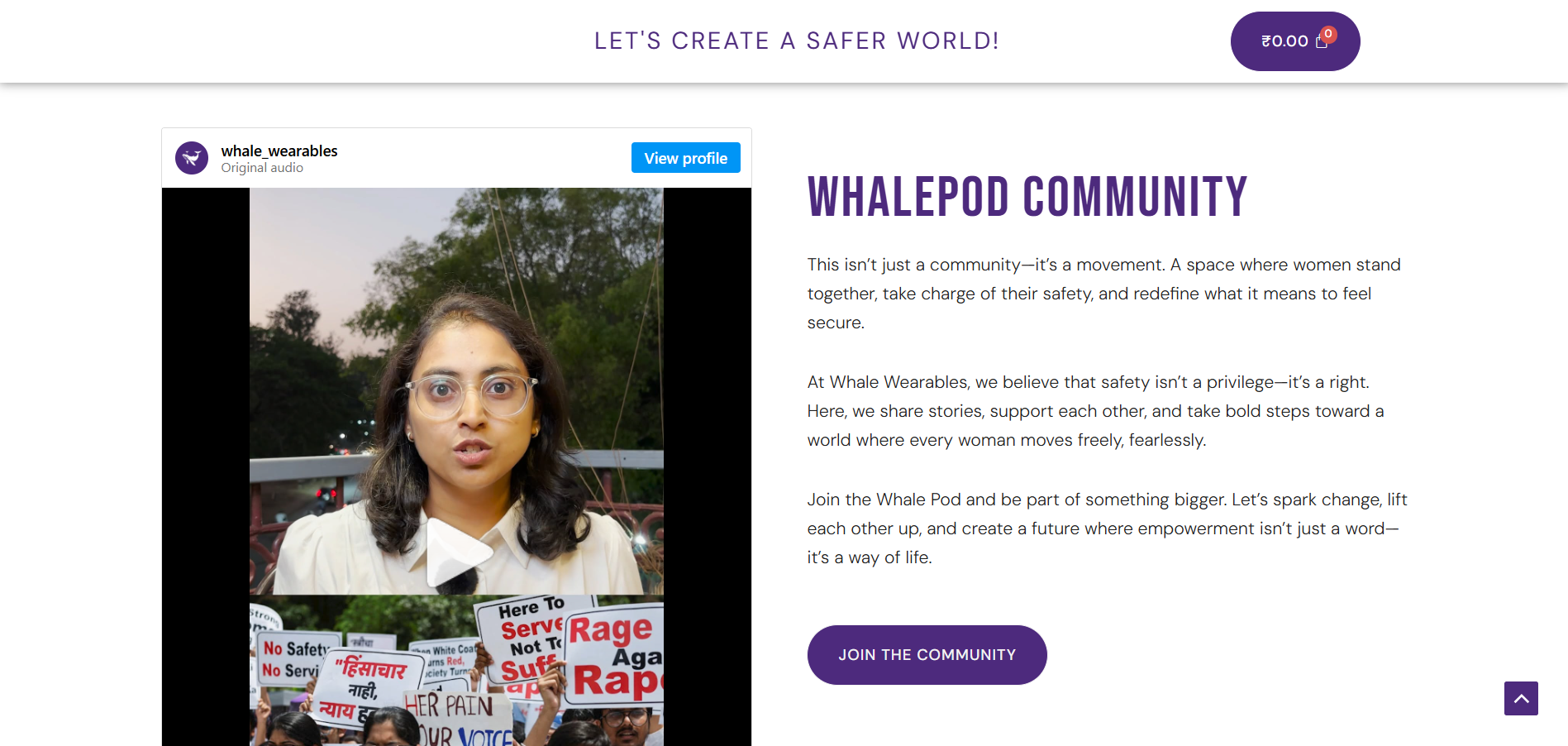
The “whalepod community” section expands the narrative from devices to movement:
Phrases like “This isn’t just a community—it’s a movement” and “a space where women stand together, take charge of their safety” elevate the brand from gadget‑maker to social‑impact enabler.
The text explicitly says “We believe that safety isn’t a privilege—it’s a right” and invites users to “Join the Whale Pod and be part of something bigger.”
This is important because Whale’s long‑term value isn’t only in selling hardware; it’s in building a trusted safety ecosystem—with stories, support, shared learnings, and eventually network effects.
5. Robust FAQ For Pre‑Booking Hardware
Because Whale’s products are in prototype / early production while they build demand, the site’s “frequently asked questions” section does heavy lifting:
It covers:
What Whale Wearables is and what the gadgets do (alerts, live location sharing, emergency assistance).
Ease of use – one tap, voice command, real‑time tracking.
Emergency contacts management via app.
Pre‑booking specifics:
Pre‑booking available for Whale Thunder and Whale Click during the prototype phase.
Pre‑booking guarantees priority shipping once products are ready.
Tentative delivery timeline (around April 2025, subject to production/quality).
Price locked at time of pre‑booking, even if prices change later.
Conditions on modifying or exchanging pre‑book orders (effectively: no changes / exchanges once confirmed, contact support for issues).
Communication promises around potential delays and tracking information.
This FAQ is critical in converting Shark Tank–driven curiosity into confident early orders, while managing expectations responsibly.
6. Support & Contact
The site clearly directs customers with issues to support@whalewearables.com, promising assistance for payment, delivery, or product concerns.
Contact and “Contact us” sections also act as reassurance for parents and institutions evaluating the brand as a partner in women’s safety programmes.
Although hard metrics are not published, the qualitative impact of the website is clear:
Post–Shark Tank, whalewearables.com acts as the single source of truth for what Whale is, what its products do, and how to pre‑book them, instead of leaving users to piece together information from media clips and social posts.
The new site gives the founders a consistent narrative to share with investors, incubators, and partners: mission → products → traction → community → FAQ.
By structuring pre‑booking, FAQs, and support clearly, the website helps Whale capture early demand and data while products are still being industrialised, which is critical for hardware startups.
The WhalePod and community messaging differentiate Whale from purely defensive or fear‑based players, framing it as a positive empowerment brand—a story that resonates in media and on platforms like Shark Tank.
For Musing Quills, Whale Wearables demonstrates the ability to build product + purpose websites for deep‑tech / hardware startups, where:
The product is new and complex,
Regulatory and ethical questions exist, and
Storytelling, trust, and FAQs are as important as aesthetics.